The Science of Chestnut Honey
1 min read · Published August 18, 2026
The chemistry behind the signature taste
Chestnut honey is distinctly different from lighter wildflower honeys: a dark amber color, a faint bitter-ish aftertaste, and an intense aroma. These traits aren't random — they come from a specific phenolic-compound profile tied to the chestnut flower.
A study of honeys from Artvin, Turkey
A 2023 study examined eight chestnut honey samples collected from Turkey's Artvin province for their physicochemical properties, phenolic compounds, and antioxidant activity. All samples were monofloral (single-source) chestnut honey; chestnut pollen content ranged from 56% to 80% across samples — a measure confirming the honey's genuine chestnut origin.
The study's findings: average total phenolic content across samples was 72.79 mg GAE/100g, total flavonoid content 2.25 mg QE/100g, and total antioxidant capacity (via the FRAP method) 312.67 μmol FeSO4/100g. Nearly all of the 19 phenolic compound standards tested were detected in the samples, with catechin, chrysin, caffeic acid, caffeic acid phenethyl ester (CAPE), and gallic acid standing out as the main components.
What do these numbers mean?
These measurements chemically explain why chestnut honey tends to be darker and more intensely aromatic than some other honey types — high phenolic/flavonoid content affects both color and the characteristic bitter notes. As covered in an earlier article, these kinds of lab measurements demonstrate honey's antioxidant capacity; whether that translates into a proven, direct clinical health benefit is a separate question, outside this study's scope.
Bottom line
Chestnut honey carries a source-specific, well-documented chemical signature. It's concrete evidence for why "all honey is the same" is wrong — floral source shapes both a honey's sensory character and its chemical identity.
İlyas Kurt Editor's Note
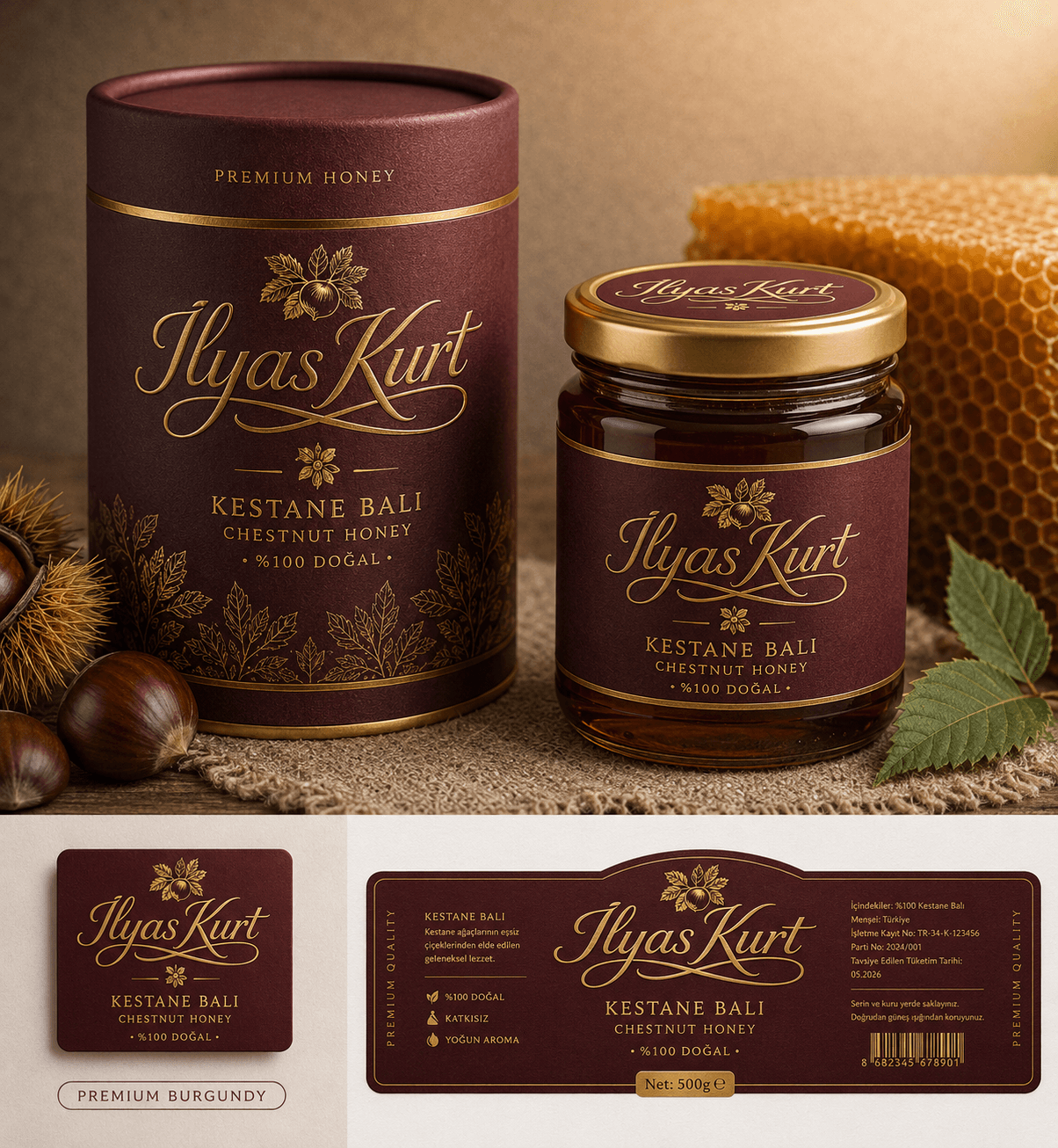
This is exactly why we offer chestnut honey alongside our pine and wildflower honeys: each has its own, measurable chemical identity. This article exists to describe that difference with lab data, not marketing language.
Sources
Every claim above draws on the sources below. Where the evidence is limited or preliminary, we've said so.
An Investigation into Chestnut Honeys from Artvin Province in Turkiye: Their Physicochemical Properties, Phenolic Profiles and Antioxidant Activities
Saral Ö — Chemistry & Biodiversity, 2023
Study type: Laboratory analysis (8 honey samples)
Key finding: Measured average total phenolic content of 72.79 mg GAE/100g and FRAP antioxidant capacity of 312.67 μmol FeSO4/100g in Artvin chestnut honeys, identifying catechin, chrysin, caffeic acid, and gallic acid as the main phenolic components.
Limitations: Small sample (8 honeys) specific to one geographic region (Artvin); a laboratory composition study, not a source of clinical human-health data.