Bees and Food Security: The Hidden Power of Pollination
2 min read · Published August 18, 2026
Not all food depends on pollination — but most dietary diversity does
First, a common misconception to clear up: staple calorie crops like wheat, rice, and corn are wind-pollinated and don't need bees. But the issue isn't total calories — it's the diversity and quality of our diet.
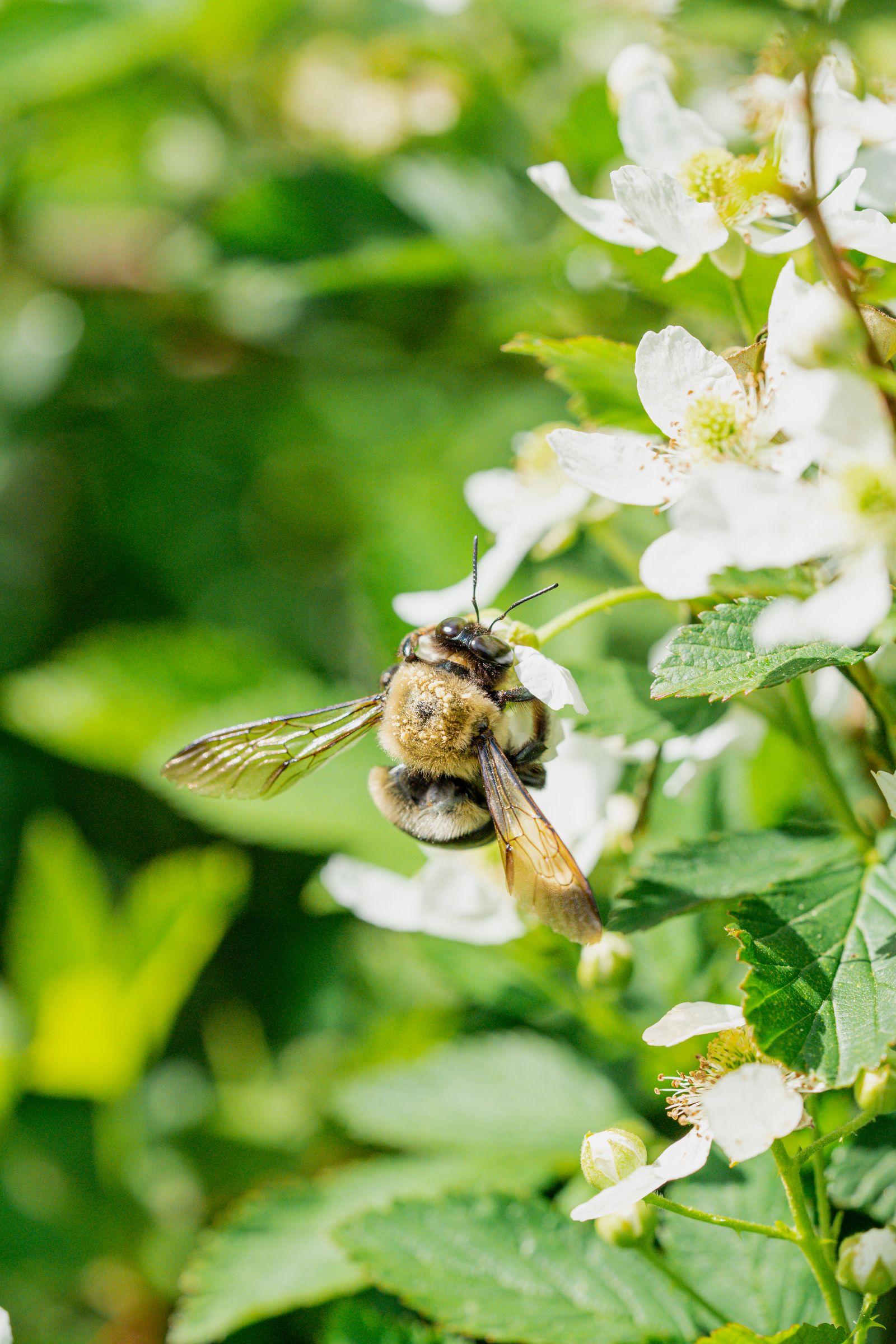
An influential study analyzing global agricultural data found that yield in 87 of the world's leading food crops — fruits, vegetables, nuts, spices — benefits at least in part from animal pollination. While these pollinator-dependent crops make up a minority (roughly a third) of total global production volume, they represent a large share of the vitamins, minerals, and dietary variety in our diets — everything from strawberries to almonds, pumpkins to coffee.
Economic value: hundreds of billions of euros
A 2009 bioeconomic modeling study estimated the global economic value of insect pollination for food production at roughly €153 billion using 2005 data — about 9.5% of the value of world agricultural food output. This figure is grounded in concrete FAO agricultural statistics across 100 pollinator-dependent crops, not an abstract guess.
The IPBES 2016 global assessment report reaches a similar conclusion: animal pollination contributes to the production of most of the world's leading food crop types, and pollinator decline poses a risk to food security, nutrition, and farmer livelihoods.
A widening supply-demand gap
Perhaps the most striking finding comes from a 2009 analysis using 50 years of global FAO agricultural data: it shows that the area planted with pollinator-dependent crops has grown faster than the global population of domesticated honey bees. In other words, as demand — the amount of farmland needing pollination — increases, the bee population available to meet that need isn't growing at the same pace. That's a widening supply-demand gap.
Bottom line: not an abstract ecological issue
The decline in bee populations isn't a distant nature story — it's a concrete issue directly tied to dietary diversity, agricultural economics, and long-term food security. In our next article, we look at the specific threats driving this decline — pesticides, habitat loss, disease, and climate change — one by one.
İlyas Kurt Editor's Note
These numbers aren't abstract to us: some of the variety on our own tables depends directly on how healthy bee populations are today.